
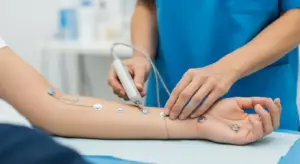
A Nerve Conduction Study (NCS) is an advanced diagnostic test that measures how effectively electrical signals travel through your nerves. At Neurolinnk Brain, Spine & Medical Superspeciality Hospital, our experts use state-of-the-art NCS technology to detect neuropathy, nerve injuries, and neuromuscular disorders early, enabling timely treatment and better outcomes.
NCS is essential for patients experiencing numbness, tingling, weakness, or unexplained pain, helping doctors pinpoint the exact location and severity of nerve damage.
Why Nerve Conduction Study is Important
Diagnoses peripheral neuropathy, carpal tunnel syndrome, and sciatica
Evaluates nerve injuries after trauma or surgery
Helps in planning treatment for neuromuscular disorders
Monitors disease progression and recovery
Conditions Diagnosed with NCS
Peripheral Neuropathy
Diabetes-related nerve damage, vitamin deficiencies, autoimmune neuropathy
Carpal Tunnel Syndrome
Pinched or compressed median nerve in the wrist
Sciatica & Radiculopathy
Compression or irritation of spinal nerve roots causing leg pain
Traumatic Nerve Injuries
Nerve damage from accidents or surgical complications
Neuromuscular Disorders
Disorders like myasthenia gravis or chronic inflammatory demyelinating polyneuropathy (CIDP)
How Nerve Conduction Study Works
Small electrodes are placed on the skin above the nerve
Mild electrical impulses are delivered
The speed and strength of nerve signals are measured
Results help doctors identify nerve dysfunction, compression, or degeneration
Key Advantages:
Non-invasive and safe
Quick procedure, usually completed within 30–60 minutes
Accurate identification of nerve disorders
Guides treatment and rehabilitation plans
Nerve Conduction Study at Neurolinnk
Conducted by experienced neurologists using advanced EMG/NCS equipment
Combined with electromyography (EMG) for comprehensive neuromuscular assessment
Tailored reporting to guide personalized treatment
Minimal discomfort, immediate evaluation, and follow-up consultation
Who Should Get a Nerve Conduction Study?
Patients with numbness, tingling, or weakness in limbs
Individuals with chronic pain or nerve injury
Those suspected of neuromuscular disorders
Monitoring nerve function post-surgery or during treatment
What is a Nerve Conduction Study and How Does it Work?
Overview:
A Nerve Conduction Study (NCS) measures how well electrical signals travel through your nerves. It helps detect nerve injuries, neuropathy, and neuromuscular disorders.
Procedure:
Electrodes are placed on the skin above the nerve
Mild electrical impulses stimulate the nerve
Signal speed and strength are recorded
Results help pinpoint nerve damage location and severity
Common Conditions Diagnosed by NCS
Peripheral Neuropathy: Diabetes-related nerve damage or vitamin deficiencies
Carpal Tunnel Syndrome: Compression of median nerve in the wrist
Radiculopathy & Sciatica: Nerve compression in the spine causing limb pain
Traumatic Nerve Injury: Post-accident or post-surgery nerve damage
Neuromuscular Disorders: Myasthenia gravis, CIDP, or other chronic conditions
Difference Between EMG and NCS
Overview:
NCS (Nerve Conduction Study): Evaluates how fast electrical signals travel through nerves
EMG (Electromyography): Measures muscle response to nerve stimulation
Why Both are Important:
Combined, EMG and NCS provide a complete picture of nerve and muscle health
Helps doctors accurately diagnose neuropathy, radiculopathy, and muscle disorders
Preparing for a Nerve Conduction Study
Patient Guide:
No fasting is required
Avoid lotions or oils on hands/feet
Wear loose, comfortable clothing
Inform your doctor about medications or pacemakers
Benefits of Nerve Conduction Study
Early Detection: Detects nerve disorders before symptoms worsen
Non-Invasive & Safe: Minimal discomfort and low risk
Accurate Diagnosis: Identifies location and severity of nerve damage
Guides Treatment: Helps plan surgery, physiotherapy, or medication
Monitors Recovery: Evaluates progress after treatment or surgery
Advanced Diagnosis at Neurolinnk Brain,Spine & Medical Superspeciality Hospital
At Neurolinnk Brain, Spine & Medical Superspeciality Hospital, we provide state-of-the-art diagnostic services for a wide range of neurological and neuromuscular disorders. Our team of expert neurologists and neurosurgeons uses advanced technology to detect conditions early, ensuring precise diagnosis and effective treatment planning.