
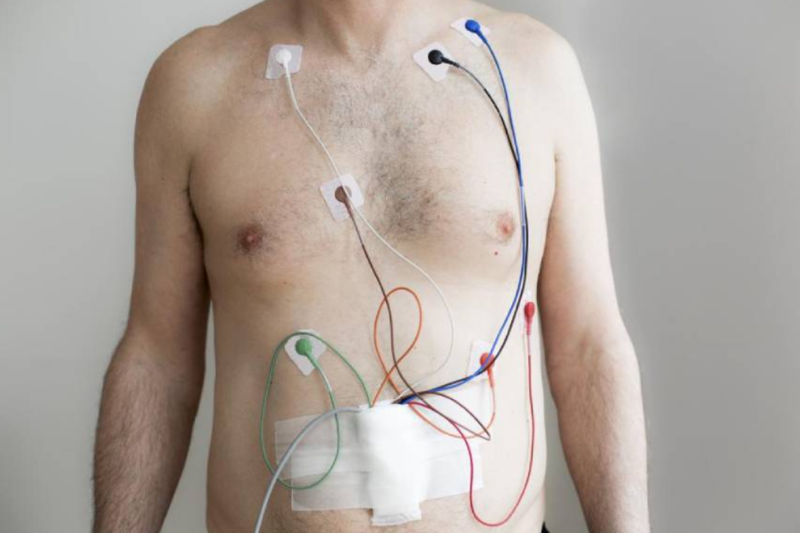
What Is 24-Hour Holter Monitoring?
How Holter Monitoring Works
Firstly, our trained technician attaches small electrodes to your chest. Then, the electrodes connect to a lightweight recording device that you wear around your waist or shoulder. Meanwhile, the monitor records every heartbeat throughout the monitoring period. After 24 hours, we analyze the data using advanced cardiac software to detect rhythm irregularities.
Conditions We Detect Through Holter Monitoring
Arrhythmias
Bradycardia and tachycardia
Atrial fibrillation
Unexplained palpitations
Syncope (fainting episodes)
Silent ischemia
Furthermore, we use Holter monitoring to evaluate pacemaker function and assess treatment effectiveness. Ultimately, this test provides detailed insight into heart rhythm patterns that routine ECG tests cannot capture.
What Is 24-Hour Ambulatory Blood Pressure Monitoring (ABPM)?
In addition to rhythm monitoring, we provide 24-hour Ambulatory Blood Pressure Monitoring. Through this advanced test, we measure your blood pressure at regular intervals during the day and night. Therefore, we assess fluctuations that clinic readings may fail to reveal.
Why ABPM Is Important
Differences Between Holter and ABPM
| Feature | 24-Hour Holter Monitoring | 24-Hour Blood Pressure Monitoring (ABPM) |
|---|---|---|
| Purpose | Records heart rhythm continuously | Measures blood pressure at intervals |
| Duration | 24–48 hours | 24 hours |
| Detects | Arrhythmias, palpitations | Hypertension, BP fluctuations |
| Activity | Normal daily routine | Normal daily routine |
| Data Analysis | Detailed ECG waveform review | BP pattern analysis day & night |
Symptoms That Require 24-Hour Monitoring
You should consider 24-hour monitoring if you experience:
Frequent dizziness
Sudden fainting spells
Irregular heartbeat
Chest discomfort
Unexplained fatigue
Persistent high blood pressure
Moreover, if you have diabetes, stroke risk, or heart disease history, continuous monitoring becomes even more crucial. Therefore, our specialists recommend early evaluation to prevent complications.
Step-by-Step Procedure at Neurolinnk
1. Initial Consultation
Firstly, our cardiologist evaluates your symptoms and medical history. Subsequently, we determine whether Holter or ABPM monitoring suits your condition.
2. Device Placement
Next, our technician attaches the device securely and explains usage instructions clearly. Meanwhile, you receive a symptom diary to record any discomfort.
3. Monitoring Period
During the 24-hour period, you continue daily activities. However, you avoid bathing or water exposure to protect the device.
4. Data Analysis
After monitoring, our cardiology team analyzes the recorded data thoroughly. Consequently, we identify abnormalities and design a personalized treatment plan.
Benefits of 24-Hour Monitoring
Moreover, 24-hour monitoring offers several clinical advantages:
Detects intermittent arrhythmias
Identifies nocturnal hypertension
Evaluates medication effectiveness
Reduces stroke risk
Prevents heart failure progression
Guides long-term cardiac management
Furthermore, early detection significantly improves patient outcomes. As a result, patients receive timely treatment before serious complications develop.